How Digital Marketing Helps Businesses Grow Faster in Today's Market
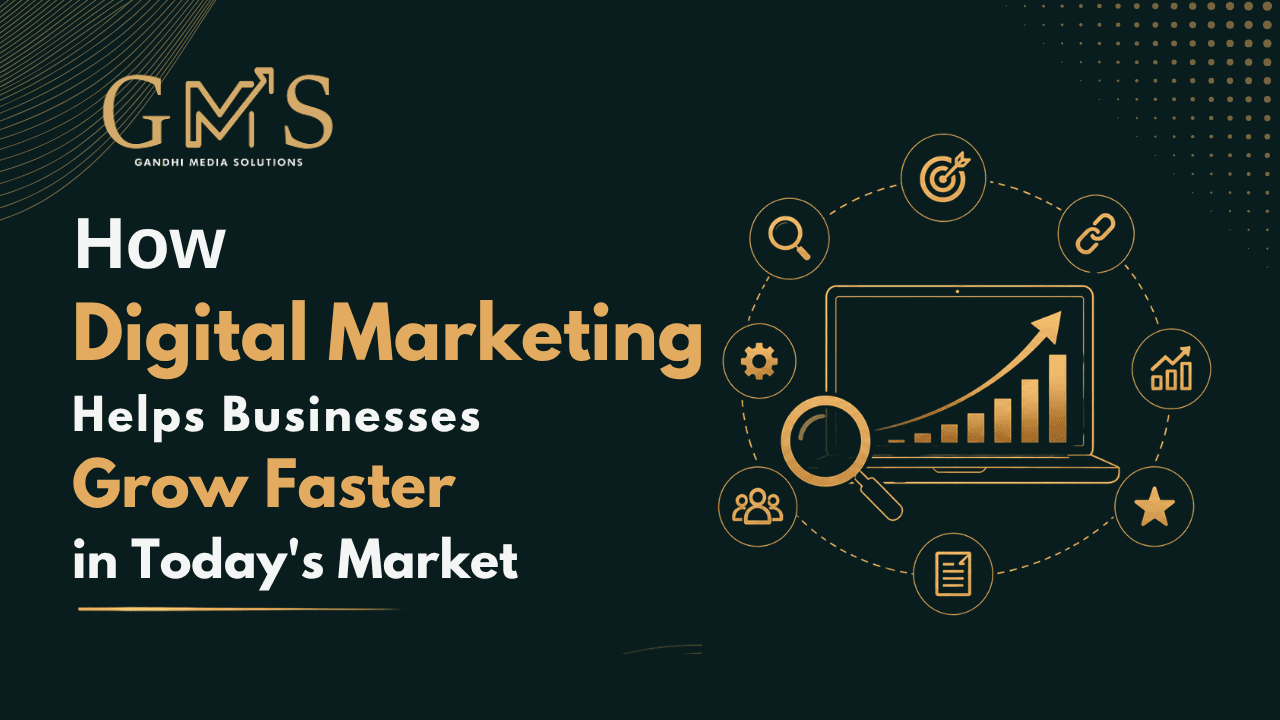
Every day, customers search Google before visiting a store, scroll through reviews before booking a service, and check social media before trusting a new brand. The businesses that show up in those moments tend to grow; the ones that don't get overlooked, no matter how good their product is. This guide breaks down what digital marketing really means, the channels that actually move the needle, and how a focused strategy can help any business — local or national — grow faster in today's crowded market.
What Is Digital Marketing? — A Simple Definition
Digital marketing is the use of online channels — search engines, social media, email, and websites — to promote a business and connect with customers where they already spend their time. Unlike a billboard or a flyer, digital marketing is interactive and measurable: businesses can see exactly who engaged with a campaign, what action they took, and what it cost to get there. In simple terms, digital marketing means putting the right message in front of the right person, on the right platform, at the right moment — and being able to prove it worked.
Traditional Marketing vs. Digital Marketing — Key Differences
Traditional marketing — TV spots, print ads, billboards, cold calls — broadcasts one message to a wide, mostly untargeted audience and offers little insight into what actually drove results. Digital marketing works differently: audiences can be narrowed by location, age, interests, and even past buying behavior, and performance can be tracked down to the individual click.
| Factor | Traditional Marketing | Digital Marketing |
| Audience reach | Broad and untargeted | Precisely targeted by behavior, location, interest |
| Typical cost | Higher fixed costs (TV, print) | Flexible, scalable to any budget |
| Measurability | Difficult to track ROI | Real-time analytics on every campaign |
| Speed of change | Slow to launch or adjust | Campaigns adjusted instantly |
| Communication | One-way | Two-way and interactive |
This shift toward measurability is the biggest reason businesses keep moving budget from traditional channels into digital ones — every rupee spent can be tied back to a result.
The Core Components of Digital Marketing
Digital marketing isn't one tactic; it's a set of channels that reinforce each other when used together.
Search Engine Optimization (SEO)
SEO improves a website so it ranks higher in search results for relevant keywords without paying for clicks. It takes longer to build than paid ads, but it compounds over time, delivering consistent, free traffic and lasting credibility.
Google My Business & Local SEO
For businesses with a physical location, an optimized Google Business Profile helps them show up in local search results and on Google Maps. Combined with consistent business listings and customer reviews, local SEO is often the fastest way for small businesses to attract nearby, ready-to-buy customers.
Pay-Per-Click Advertising (Google Ads / PPC)
PPC places a business at the top of search results or across relevant websites instantly, with payment due only when someone clicks. It's the go-to channel for quick visibility and lead generation while slower strategies like SEO build in the background.
Social Media Marketing
Platforms like Instagram, Facebook, LinkedIn, and YouTube let businesses build relationships with their audience, showcase products in action, and run highly targeted ad campaigns based on real user interests and demographics.
Content Marketing
Content marketing means creating useful blogs, videos, and guides that answer real customer questions and build trust before a sale happens. It supports SEO and positions a brand as a credible source rather than just another advertiser.
Online Reputation Management (ORM)
ORM involves monitoring and improving how a business appears online — managing reviews, responding to feedback, and addressing negative content quickly. Since most buyers check reviews before purchasing, reputation directly affects conversion rates.
Email Marketing
Email remains one of the highest-return digital channels because it nurtures leads, re-engages past customers, and delivers personalized offers directly to an inbox, independent of any platform's algorithm.
Why Every Business Needs Digital Marketing in 2026
Digital marketing has moved from "nice to have" to essential — it's now the primary way most customers discover, evaluate, and choose a business.
Your Customers Are Online — All the Time
From researching products to comparing prices and reading reviews, customers spend a significant part of their day across search engines, apps, and social platforms. A business that isn't visible there is effectively invisible to a large share of its market.
It Levels the Playing Field
A well-planned digital campaign lets a small or local business compete for attention alongside larger competitors, often at a fraction of traditional advertising costs.
It Delivers Measurable, Trackable Results
Every campaign — from a single ad to an entire SEO strategy — can be measured in clicks, conversions, and cost per lead, so decisions are based on data instead of guesswork.
It Builds Long-Term Brand Authority
Consistent SEO, content, and social media presence position a brand as a trusted authority in its space over time, rather than a business that only appears when it's paying for ads.
It Generates Higher-Quality Leads
Because digital channels allow precise targeting, campaigns reach people who are already interested in the product or service, rather than a broad, indifferent audience.
It Is Cost-Effective for Any Budget
Digital marketing scales from a modest monthly budget for a small shop to a large, multichannel strategy for an enterprise brand, without requiring the large upfront spend traditional media demands.
It Helps You Stay Ahead of Competitors
Competitors are very likely already investing in SEO, paid search, and social media; staying absent from these channels usually means losing visibility to them by default.
Digital Marketing for Different Industries
The right mix of channels depends on the industry and how its customers typically search and buy.
- Healthcare & clinics — Local SEO, an optimized Google Business Profile, and reputation management build the trust patients need before booking.
- Real estate — Social media and PPC showcase listings visually, while email nurtures buyers through a longer decision cycle.
- E-commerce — SEO, paid shopping ads, and email marketing drive both new traffic and repeat purchases.
- Restaurants & local services — Local SEO, review management, and social media engagement keep the business visible in its community.
- B2B & professional services — LinkedIn marketing, content marketing, and email campaigns nurture longer, more considered sales cycles.
Common Digital Marketing Mistakes Businesses Make
Even well-intentioned campaigns underperform when a few common mistakes go unnoticed:
- Treating digital marketing as a one-time project instead of an ongoing, evolving strategy.
- Ignoring online reviews and reputation until a problem forces attention.
- Running paid ads without proper tracking, leaving it unclear what's actually working.
- Posting on social media without a content plan tied to real business goals.
- Relying on a single channel, like ads, while neglecting SEO and content that build value over the long run.
- Expecting instant results when most digital marketing—especially SEO—needs consistent effort over several months to fully compound.
How Gandhi Media Solutions Can Help Your Business Grow
At Gandhi Media Solutions, the focus is on building a digital marketing strategy around how your specific customers actually search, browse, and buy, rather than applying the same generic playbook to every client. That typically means combining local SEO and Google Business Profile optimization to capture nearby, ready-to-buy customers, targeted PPC campaigns for immediate visibility, content and social media marketing to build long-term trust, and ongoing reputation management to keep the brand looking its best online. Every engagement is backed by clear, transparent reporting, so business owners always know what's working, what isn't, and where their budget can work harder.
Getting Started — A Step-by-Step Roadmap
- Audit your current presence — website, Google Business Profile, social media, and existing reviews.
- Define clear, measurable goals — more leads, more local visits, or more online sales.
- Identify priority channels based on where your specific customers actually spend their time.
- Build foundational assets — an optimized website, a complete Google Business Profile, and a basic content calendar.
- Launch targeted campaigns (PPC, social ads) for fast visibility while SEO and content build momentum in the background.
- Track performance monthly and adjust based on real data rather than assumptions.
- Scale what works and phase out what doesn't.
Conclusion
Digital marketing isn't a passing trend — it's how modern customers find, evaluate, and choose the businesses they buy from. SEO, local search, paid advertising, content, social media, reputation management, and email all work best as a connected system, where each channel reinforces the others. The businesses that grow faster aren't always the ones with the biggest budget; they're the ones that invest consistently, track their results honestly, and keep refining their strategy based on what the data actually shows.
Frequently Asked Questions (FAQs)
What is the main goal of digital marketing?
The main goal is to connect a business with the right customers online, at the right time, in a way that can be measured and continuously improved.
How long does digital marketing take to show results?
PPC and social media ads can show results within days, while SEO and content marketing typically take three to six months to build meaningful, lasting traffic.
Is digital marketing only for big businesses?
No. Because most digital channels are scalable, even small, local businesses can run effective campaigns within modest monthly budgets.
Which digital marketing channel should I start with?
It depends on the goal: local businesses often see the fastest results from Google Business Profile and local SEO, while e-commerce brands may prioritize SEO and paid shopping ads.
Do I need to be active on every social media platform?
No — it's usually more effective to focus on one or two platforms where the target audience is genuinely active, rather than spreading effort thin across all of them.